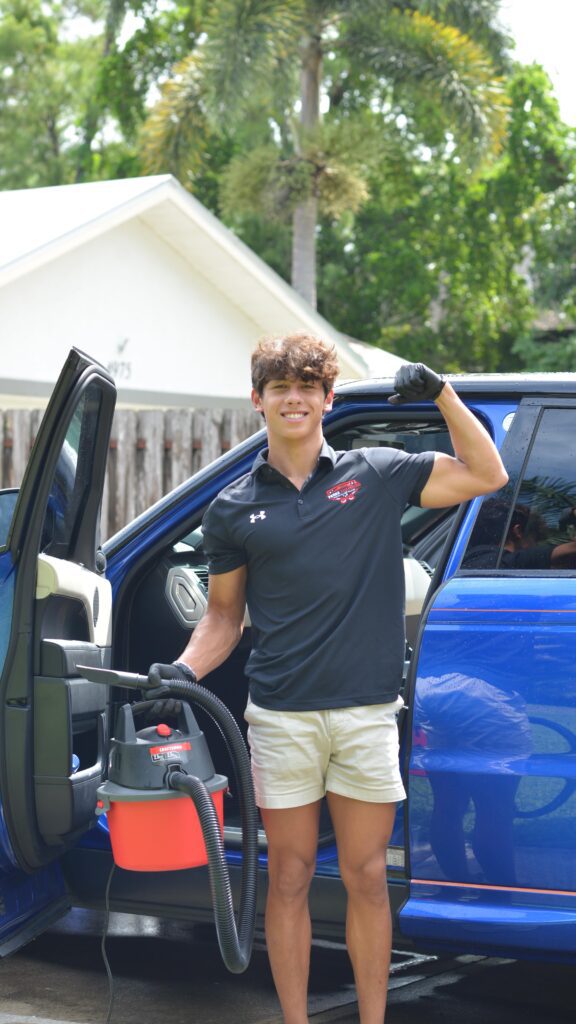
Before I ever hit a million views, I was scrubbing wheels in the Florida heat. Running a car detailing business as a high schooler taught me more about content creation than any online course ever could. That sounds like a stretch, but stay with me — the overlap is real.
How the Business Started
Perez Polishing started the way most teenage businesses do: I needed money, and I was willing to work. Washing and detailing cars isn’t glamorous. It’s hot, it’s physical, and your customer can see exactly what kind of job you did — there’s no hiding a streaky window or a missed spot on the interior.
What began as a way to make cash turned into a real operation: repeat customers, referrals, a schedule, and a reputation I had to protect every single time I touched someone’s car.
Lesson One: The Before-and-After Is Everything
Detailing taught me that people don’t pay for effort — they pay for transformation. Nobody cares that I spent three hours on a car. They care that it looked terrible before and incredible after.
Content works exactly the same way. The videos that perform are transformations: a story with a beginning and a payoff, a skill going from attempt to result. When I started filming my detailing work, the before-and-after clips outperformed everything else I posted. That’s not an accident. Transformation is the oldest hook there is, and I learned it with a pressure washer before I understood it with a camera.
Lesson Two: Consistency Beats Talent
There were plenty of Saturdays I did not want to detail cars. It was 95 degrees, my friends were at the beach, and I had three vehicles booked. I showed up anyway, because the business only worked if people could count on me.
Posting is the same. The creators who win aren’t always the most talented — they’re the ones who post when they don’t feel like it. When a video flops, they post again. The algorithm rewards the same thing customers reward: showing up, over and over, at a standard people can trust.
Lesson Three: Your Reputation Compounds
In a local business, one great job turns into three referrals. One bad job can cost you a whole neighborhood. Every car was an investment in my name — and that name kept working for me while I slept.
Online, your name compounds the same way, just faster and more publicly. Every video, every comment reply, every collab either builds trust or spends it. I treat my content reputation exactly like I treated my detailing reputation: protect it on every single job, because you never know which one gets you the referral that changes everything.
Lesson Four: Know Your Numbers
Detailing forced me to learn pricing, costs, and profit before I could drive. How much for supplies? What’s my hourly rate really, after everything? Is this customer worth the drive?
Most creators never think this way. They chase views without asking what a view is worth, or take brand deals without knowing their value. Because I ran a business first, I look at creator opportunities the way I looked at detailing jobs: what does this cost me, what does it build, and does it respect the price of my time?
Lesson Five: The Boring Reps Are the Business
Here’s the detailing secret nobody posts about: ninety percent of the job is the same motions, every time, in the same order. Wheels first. Two-bucket wash. Work top to bottom. The flashy finish photo that gets the customer excited only exists because of a checklist that never changes.
Content has the same hidden skeleton. The videos that look effortless come from a repeatable process: hook in the first second, one idea per video, caption written before filming, post at the time your audience is actually awake. When a video of mine performs, it’s rarely magic — it’s the checklist executed cleanly on a good idea. When one flops, I review which step I skipped. Treating creativity like a process sounds like it would kill the fun. It’s the opposite: the process handles the boring parts so the personality can do its job. Detailing drilled that into me two summers before the algorithm ever paid me for it.
The Bigger Point
People treat “small business kid” and “viral creator” like two different worlds. They’re the same world. Both are about doing work you’re proud of, in public, consistently, until your name means something.
If you’re a young creator, I’d honestly tell you to go run something real first — mow lawns, flip sneakers, detail cars. You’ll learn transformation, consistency, reputation, and numbers with real stakes. Then bring all of it to your content. That combination is rarer than talent, and it lasts longer than any trend.